Hot water systems rarely get attention until they fail or the power bill arrives. Yet in many Australian homes, water […]

The need for hot water in Australian homes has changed a lot over the last decade.
Showers are longer. Appliances run more often, and families are juggling work-from-home schedules.
At the same time, energy prices keep rising, and space inside modern homes keeps shrinking.
This change explains why tankless water heaters are essential to our homes. They are becoming a serious alternative to traditional storage tanks across Australia.
According to industry data from plumbing suppliers and energy reports, on-demand systems now make up a growing share of new hot water installations.
This is especially true in renovations and higher-density housing.
Rheem is one of the most recognisable hot water brands in Australia that has been at the centre of that change. Rheem’s tankless lineup covers both gas and electric tankless water heater options.
Some rely on natural gas. Others are fully electric. The best options include:
This guide breaks down the best Rheem tankless water heaters available, explains how they actually work in real homes and helps you decide which type fits your situation.
After comparing different Rheem tankless water heater models, we found the following to offer the best combination of efficiency, reliability, and value for Australian homes.
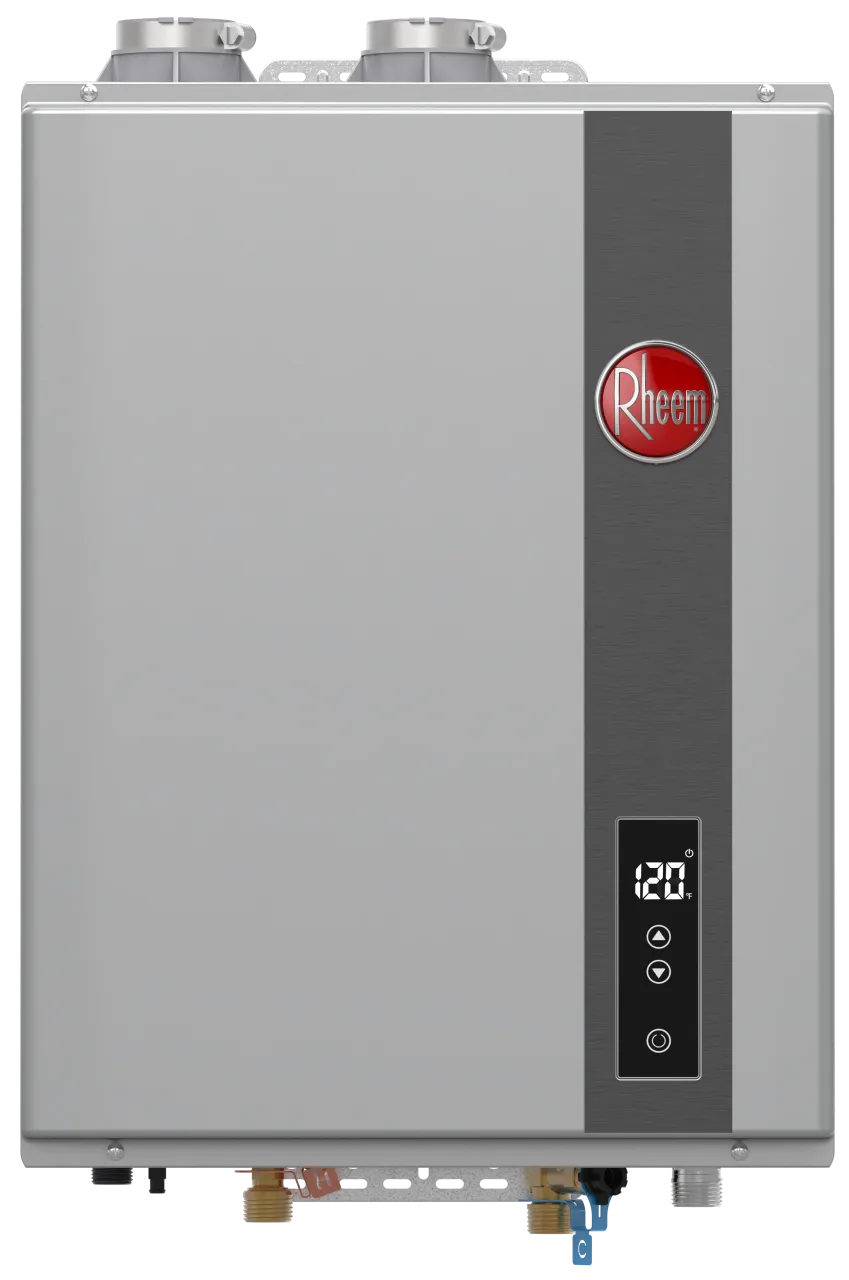
The RTGH series is the best overall Rheem gas tankless water heater.
These condensing units are meant for homes that require a continuous hot water supply from various points. They are condensing models that re-use heat that would otherwise be wasted into the atmosphere.
The series is well-suited for indoor installation and accommodates either natural gas or LPG systems.
The flow rate is strong enough for households with multiple facilities like showers, faucets, and appliances being in operation concurrently.
The series features a sophisticated control system for regulating steady outlet temperature levels even when subjected to changes in demand.
Key features and specs
Why Buy: Designed for larger families requiring continuous access to hot water without storage constraints
Price: ~AUD1,800 – 3,000
Best for: Multifamily homes with bathrooms.
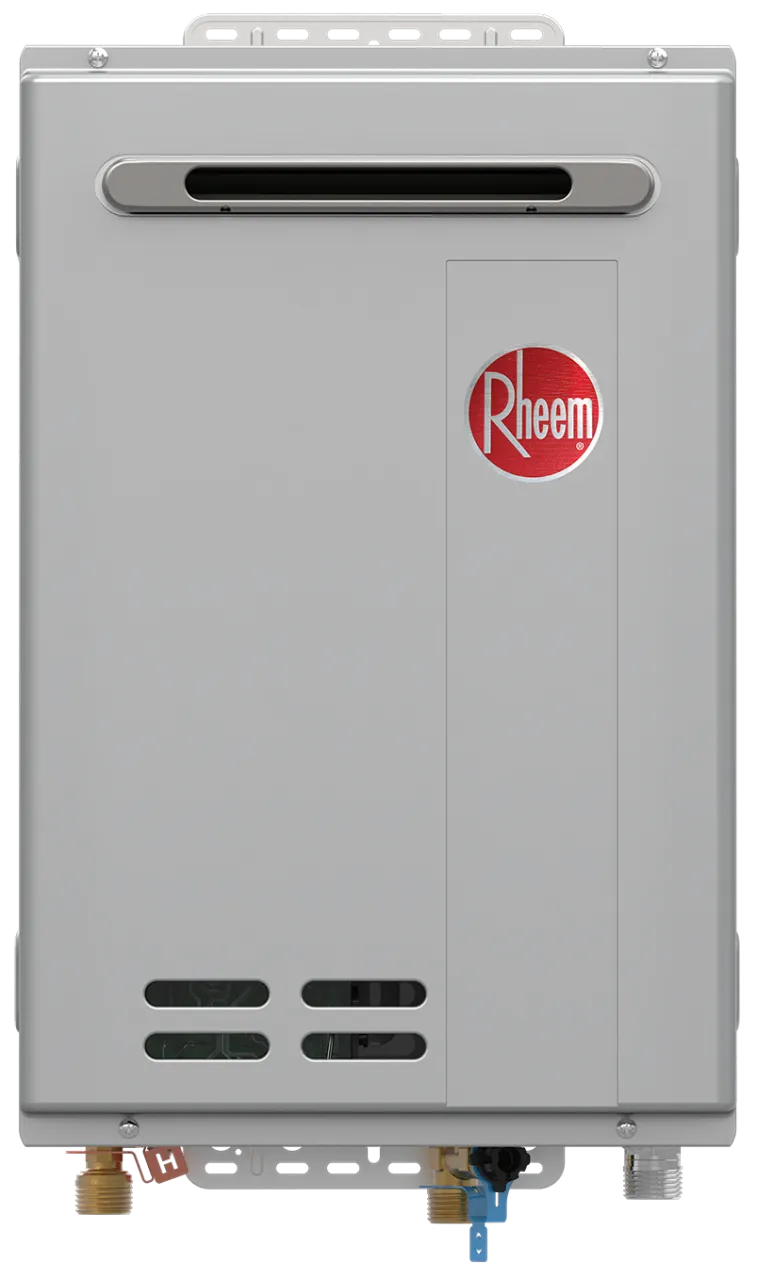
If you’re looking for a solid outdoor gas tankless heater that won’t leave you running out of hot water in the middle of a shower, the Rheem RTG Outdoor Gas Tankless is worth a close look.
It’s one of Rheem’s non‑condensing outdoor models designed for straightforward installation and dependable everyday use, especially if you’ve got propane supplied to your home.
This unit is built around simplicity and performance.
It offers a continuous flow of hot water without relying on a bulky tank.
That means you only heat water when you need it — showers, dishes, laundry — all without massive standby losses.
One of the standout things here is the efficiency.
With a UEF rating of up to 0.82, this tankless system can be around 34% more efficient than a standard 50‑gallon tank heater. That’s real savings over time, especially if you’re replacing an older, less efficient unit.
Key features and specs:
Why buy: A dependable outdoor propane gas tankless option that balances efficiency with solid everyday performance.
Price: ~AUD800 – AUD1,500 (supply only)
Best for: Medium to larger homes with outdoor space and propane supply

The Rheem IKONIC Condensing Gas Tankless heater sits near the top of Rheem’s gas tankless range.
It’s a step up from basic models with features that matter if you want real performance, efficiency and smart everyday behaviour from your hot water system.
What makes it even better is how much heat it extracts from the gas it burns.
With a 0.96 UEF efficiency rating, it’s significantly more efficient than older tank systems and many non‑condensing tankless units. That means less wasted energy and lower ongoing costs.
This unit is designed to handle real household demand.
It delivers around 10.1 gallons per minute, which translates to dependable hot water for showers, laundry and dishwasher use without that unpleasant “cold splash” you sometimes get when a system can’t keep up.
Key features and specs
Why buy: A powerful condensing gas unit that delivers strong flow and excellent energy efficiency without sacrificing convenience.
Price: ~AUD1,800 –AUD3,000 (supply only)
Best for: Medium to large homes with steady hot water demand
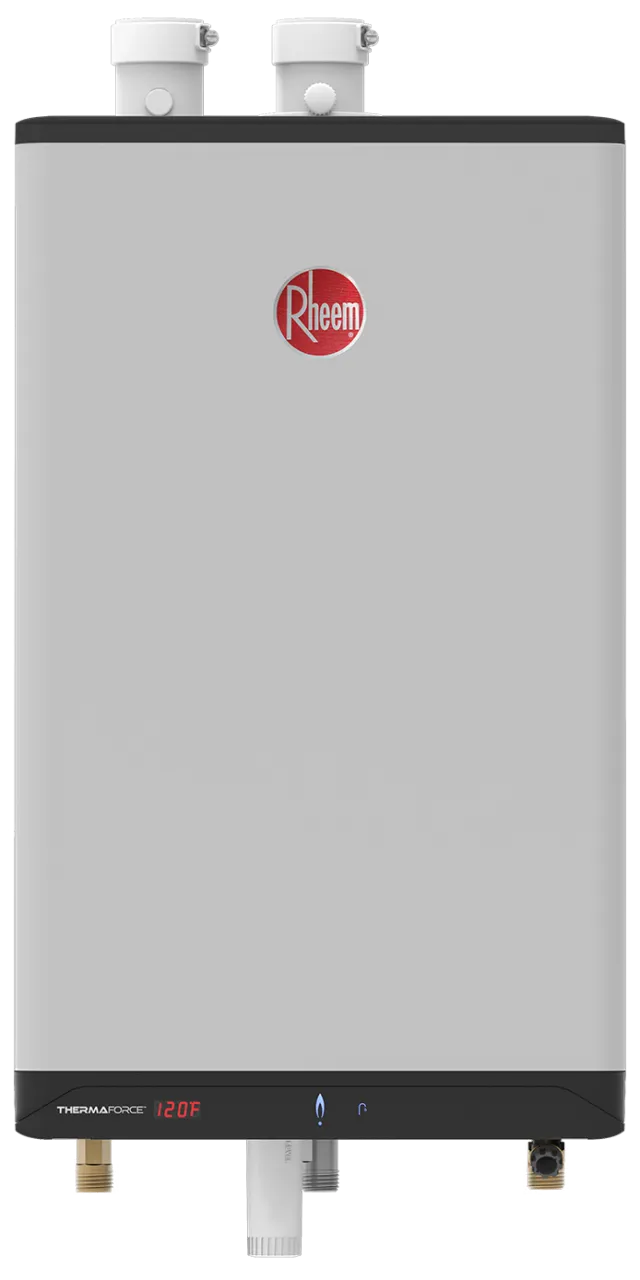
The Rheem ThermaForce Condensing Gas Tankless heater is one of the strongest options in Rheem’s high‑efficiency lineup.
It’s designed for homeowners who want serious hot water performance without the delays. It does that with a solid mix of power, simplicity and durability.
Right away, the max flow rate of around 10.1 gallons per minute tells you this model can keep pace with multiple fixtures running at once.
That kind of steady delivery is exactly what busy Australian homes want, especially during morning rush hour or dinner prep.
Another thing that makes it the best is how it balances efficiency and durability.
It carries a UEF rating of 0.90, which is strong for a condensing gas model.
That translates to noticeable energy savings in some cases, reducing gas costs by up to around 32% compared to older non‑condensing units.
Key features and specs
Why buy: Great balance of strong output, efficiency, and straightforward daily use.
Price: ~AUD1,800 – AUD3,000 (supply only)
Best for: Medium to large homes with busy hot water demand
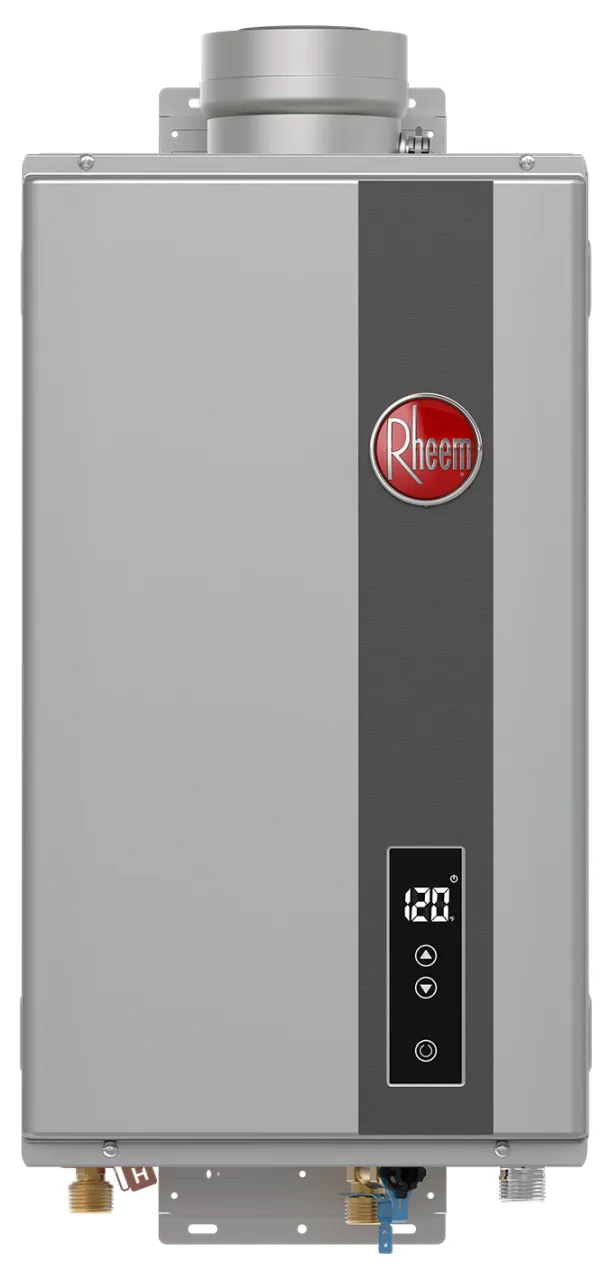
The Rheem RTG Indoor Gas Tankless heater is a reliable gas‑powered tankless system designed for indoor use.
If you’re switching from a traditional hot water tank or replacing an older inline unit, this one feels familiar in how it works, but smarter and more efficient.
This RTG model is part of Rheem’s high‑efficiency non‑condensing series.
It doesn’t have the extra condensing loop some of the premium gas units do, but it still delivers continuous hot water with fewer losses than old storage tanks.
Since it is designed for indoor mounting, you don’t need separate weatherproof housings, and it’s compatible with common venting configurations.
This unit puts out a continuous flow rate that’s strong enough for whole‑house use, meaning you can be running a shower and dishwasher without the water suddenly running cold.
It’s not the absolute highest‑capacity model Rheem makes, but for most families, it’s more than adequate, and it does it without the bulk or noise you sometimes see in older gas models.
Key features and specs
Why buy: A dependable indoor gas tankless system that balances performance and value without unnecessary complexity.
Price: ~AUD900 – AUD1,400 (supply only)
Best for: Medium households with natural gas access and indoor installation space
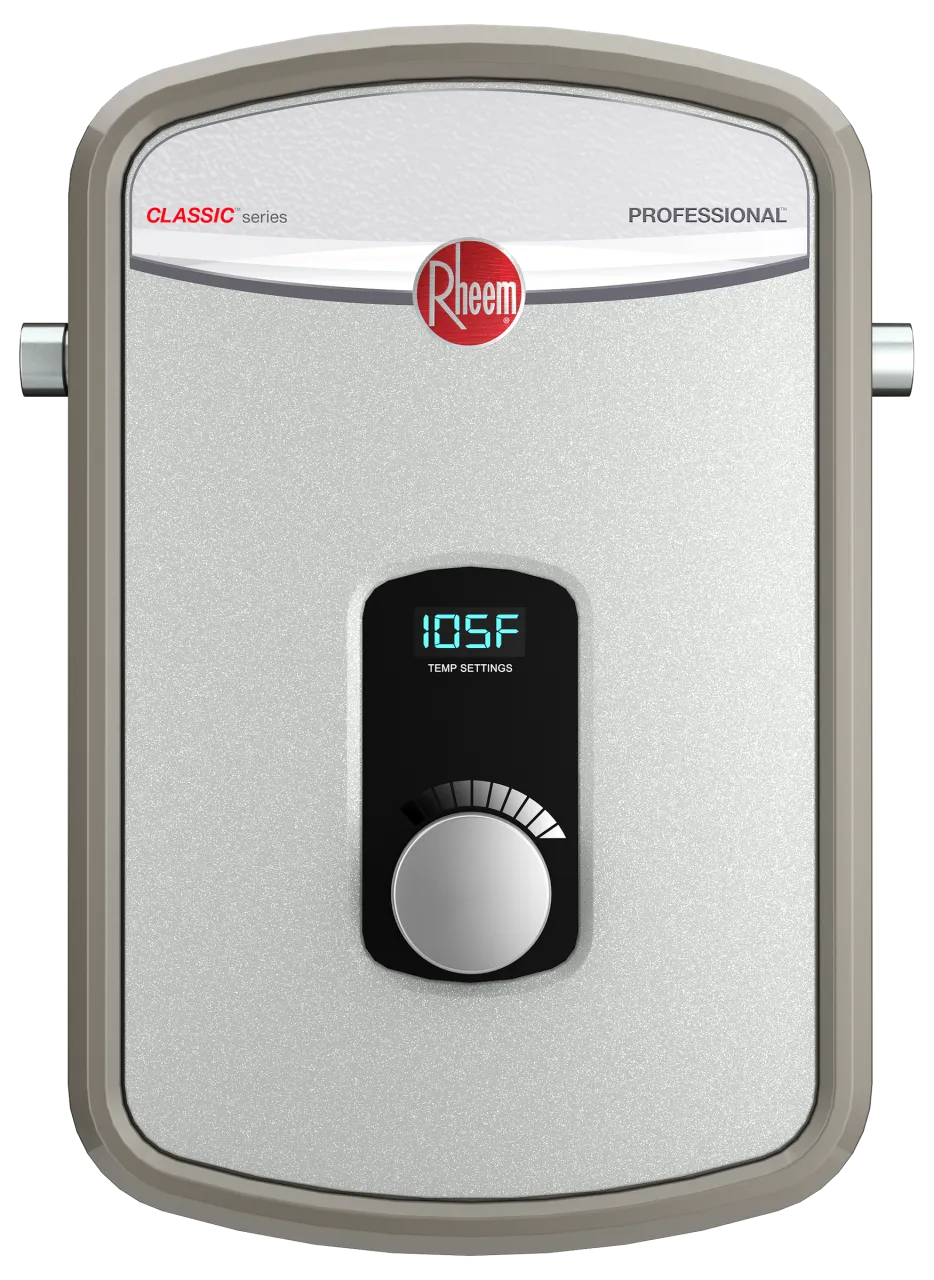
The Rheem RTEX‑08 Electric Tankless is one of the smaller but surprisingly capable electric on‑demand water heaters in Rheem’s Professional Classic line.
This unit is built for homes or specific fixtures where space is tight, yet reliable hot water is still a priority. It’s compact, energy‑lean and doesn’t waste heat while it waits.
This is exactly what you want if you’re tired of running out of hot water or overpaying to keep a big tank warm all day.
Rheem built this model with practical performance in mind.
It can deliver up to about 1.4 GPM (gallons per minute) of continuous hot water, which translates to enough hot flow for a typical kitchen sink or a low‑flow shower head.
The built‑in digital thermostat lets you dial in temperatures in one‑degree increments between roughly 26 °C and 60 °C — that’s precise control.
Key features and specs
Why buy: Ideal electric tankless pick for small spaces or single‑point use without gas lines.
Price: ~AUD350 – AUD500 (supply only)
Best for: Under‑sink installation, kitchen points‑of‑use, or small bathrooms where gas isn’t an option.
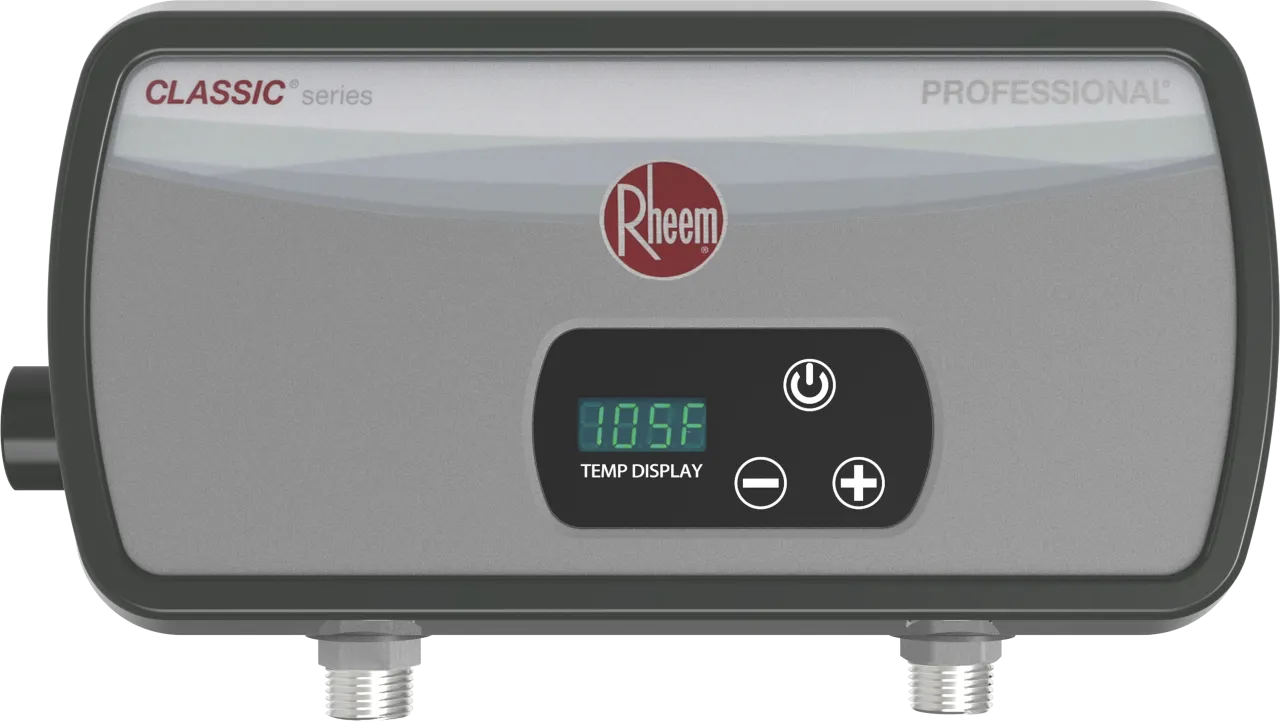
The Rheem RTEX-06T Electric Tankless unit is one of the most compact and easy-to-fit on-demand heaters in Rheem’s Professional Classic range.
It’s small in size, but it delivers surprisingly practical performance for places where you don’t need a full house system.
This includes kitchen sinks, small bathrooms, laundry rooms, or anywhere a traditional hot water tank feels too big or out of place.
There’s no gas line, no venting and no bulky storage tank. You mount it close to the point of use, and it heats water only when you need it.
This unit is rated for 6 kW of electrical output, which gives you enough hot water for low-flow fixtures.
It won’t power multiple bathrooms at once, and it’s not meant to replace a whole-house system in larger homes. However, that’s also why it’s so affordable and easy to install.
Key features and specs
Why buy: A straightforward and budget-friendly electric tankless option for single fixtures or small usage points.
Price: ~AUD300 – AUD450 (supply only)
Best for: Small bathrooms, laundry sinks, kitchen points-of-use where gas isn’t needed or available
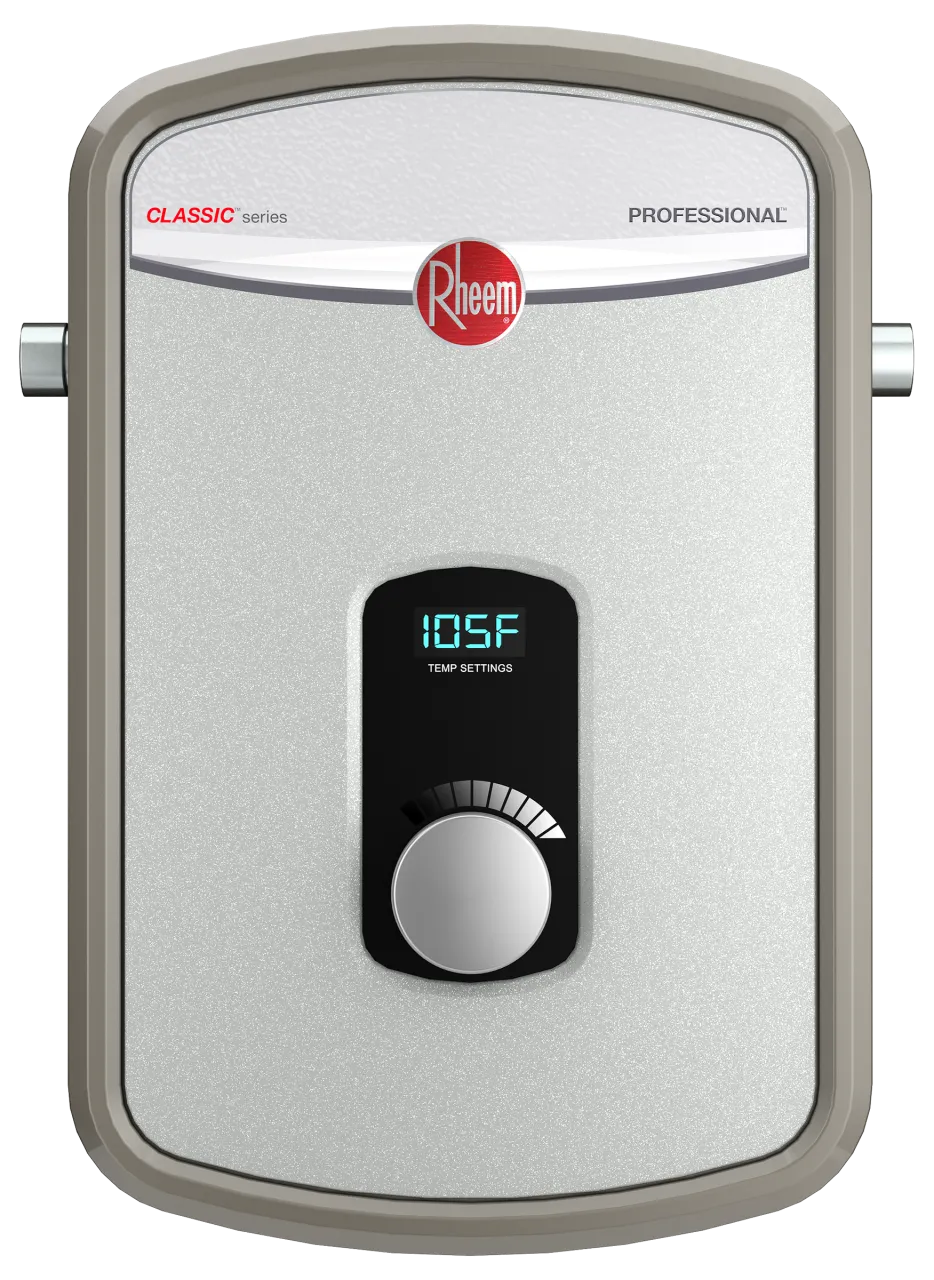
The Rheem RTEX-11 Electric Tankless is one of the most versatile electric on-demand water heaters.
It works especially well in smaller homes, apartments* or medium bathrooms where demand is steady but not overwhelming.
With an 11 kW output, this model can deliver around 2–3 gallons per minute of continuous hot water.
That’s enough for everyday tasks like showering, washing dishes and laundry cycles without that annoying drop in temperature you sometimes get with undersized units.
Like other Rheem electric tankless heaters, the RTEX-11 turns on only when water flows through it. That means no energy wasted keeping a big tank heated all day.
This on-demand operation saves power and keeps your utility bills tighter. This is a plus when you’re trying to manage running costs over the long haul.
Another everyday benefit is the digital temperature control.
You can fine-tune the outlet temperature in precise increments. This makes a noticeable difference if you’re switching between tasks.
Key features
Why buy: Great choice for everyday use where gas isn’t an option, but you still want reliable hot water for showers and chores.
Price: ~AUD400 – AUD600 (supply only)
Best for: Small to medium homes or bathroom points where consistent hot water is needed
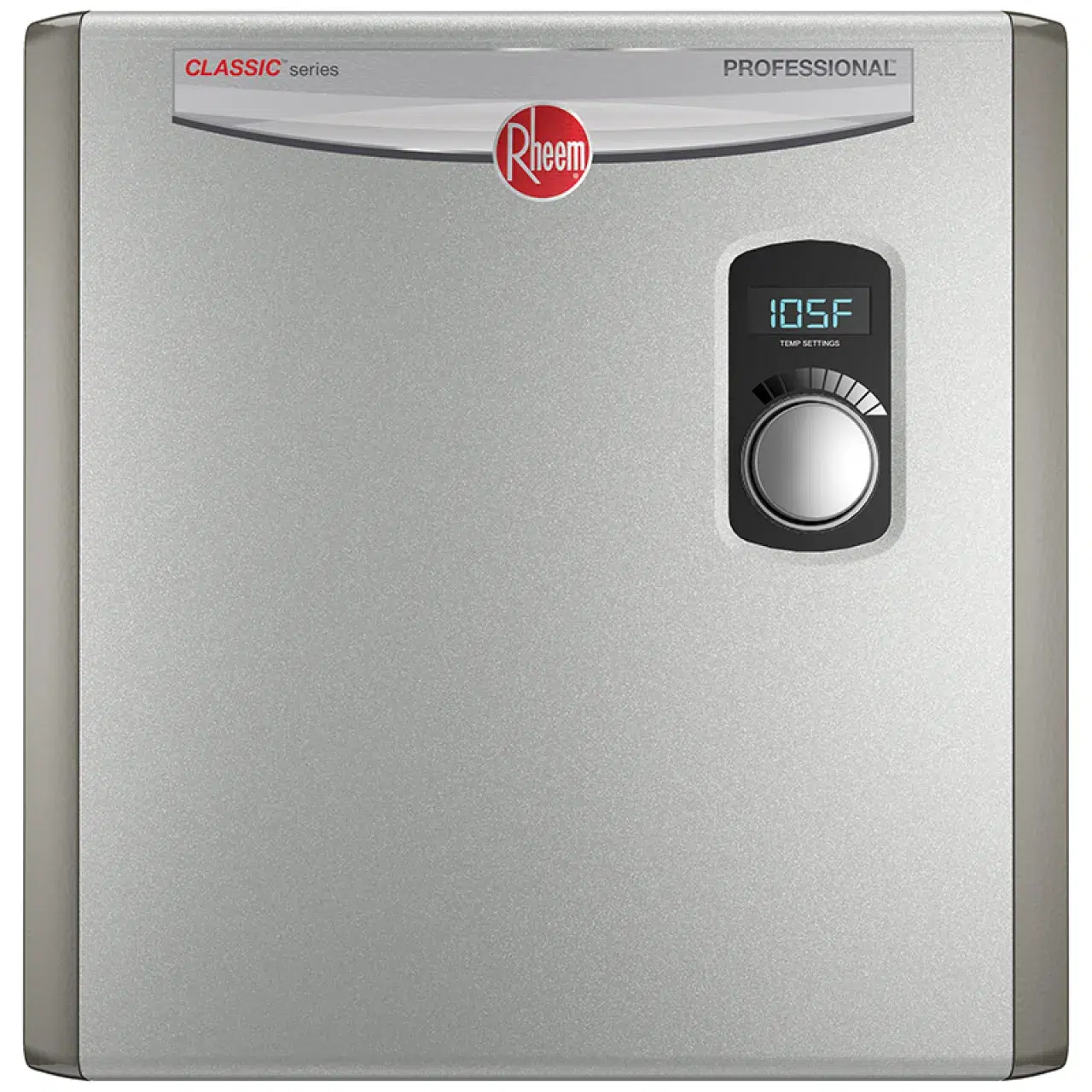
If you need solid hot water performance without gas, the Rheem RTEX-27 Electric Tankless sits in a really practical middle ground.
It is bigger and more capable than the smaller RTEX-08 or RTEX-11 models.
The heater is built for homes where you want whole-house hot water or at least multiple outlets running at the same time, but you want to keep things electric, simple, and efficient.
This model pushes out around 27 kW of electrical power.
This means it can support multiple showers and appliances running together, especially in regions where the incoming water isn’t super cold. That’s exactly what makes it a solid choice for everyday Australian home use.
In addition, it only uses energy when water flows through it, so you don’t waste a cent heating water you’re not using.
Another important feature is the digital temperature control. You get precise and step-by-step control of your water temperature, which is easily adjustable on the unit.
Key features and specs
Why buy: A powerful electric tankless option that can handle whole-home hot water demands without resorting to gas.
Price: ~AUD600 – AUD800 (supply only)
Best for: Medium to large homes that want all-electric hot water with strong flow rates
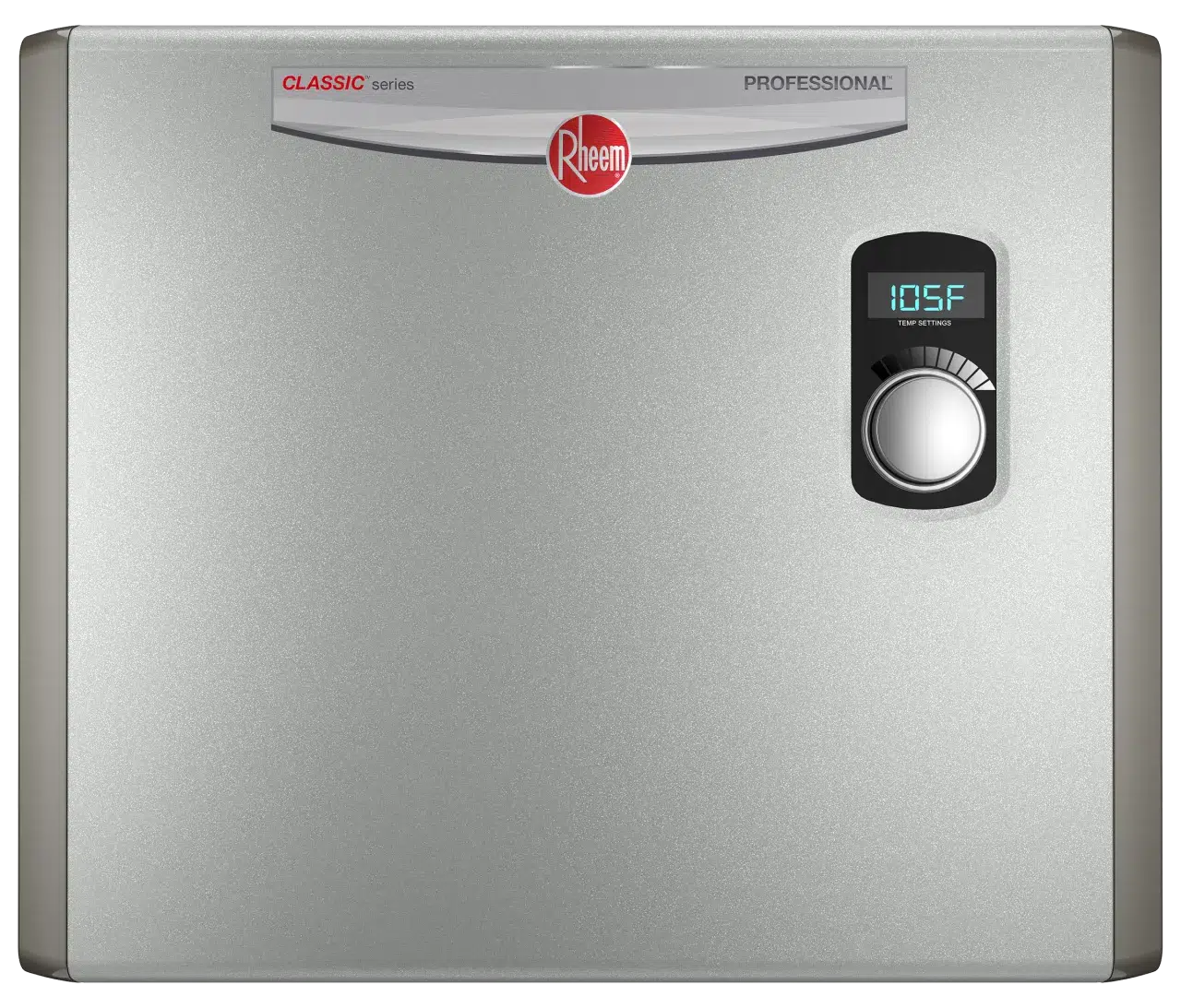
The Rheem RTEX-36 Electric Tankless heater steps up to around 36 kW of power and can deliver continuous hot water at up to around 6.5 GPM flow.
This is enough for several showers, a dishwasher and a washing machine running at once without that frustrating dip in temperature.
That’s the kind of performance that feels most like a traditional tank system but without the bulk or standby heat loss.
Everything about this unit leans into on-demand efficiency. It stays quiet. It heats only when you open a tap. And because it skips the big storage tank, there’s no energy wasted keeping a reservoir warm around the clock.
That’s simple and real savings, especially in fully electric homes.
Temperature control is straightforward and precise.
A digital thermostat lets you tune the water exactly where you want it, in one-degree steps between about 26 °C and 60 °C.
Key features
Why buy: Most powerful all-electric tankless option in the Rheem range, perfect for bigger homes without gas.
Price: ~AUD700 – AUD900 (supply only)
Best for: Larger all-electric homes needing strong hot water flow
A tankless water heater, also known as a demand-type or instantaneous water heater, heats water only when you need it.
There’s no storage tank sitting full all day.
When you open a tap, cold water flows through a heat exchanger inside the unit. The system heats it instantly and sends hot water straight to the outlet.
That’s how simple and powerful it is.
Usually, traditional storage systems heat a fixed volume of water and keep it hot around the clock. Once that tank empties, you wait.
Meanwhile, tankless systems don’t store water at all. They respond to demand instead.
When it comes to electric tankless water heater models, they use heating elements powered by electricity. On the other hand, gas models use burners fed by natural gas or LPG.
Both do the same job.
However, they behave differently depending on flow rate, climate and household size.
In Australia, tankless systems tend to suit:
Choosing a hot water system is more than just picking a brand.
It’s about daily convenience, energy efficiency and knowing your home will have reliable hot water for years.
Here is why you need to choose Rheem tankless water heaters.
The first thing that captures the attention of a homeowner regarding a Rheem tankless water heater is the slim design.
Storage tank water heaters take up a lot of space in a laundry room, a storage area like a garage, or an under-stair storage space. However, a tankless water heater is sleek and mounted on the wall.
It makes a lot of difference when space is an issue in apartments or homes. You’re creating space that ultimately translates to an orderly life.
In Rheem’s tankless solutions, hot water is only made whenever it’s needed.
In traditional water heaters, water stays hot the entire day, even when there’s no one using it, which translates to losing money through electricity or gas.
Tankless systems cut the losses.
Condensing units such as the RTGH or IKONIC, improve even further on this aspect because they also recapture lost heat.
So they are much more energy-efficient than conventional gas heaters.
By the way, there is nothing annoying than running out of hot water mid-shower. Tankless Rheem units give you instant access to hot water, meaning that there’s never a pause in showers, baths, or appliance use. It can handle multiple showers or baths or other appliance use related to hot water, such as a soak or an evening bath, provided the unit is appropriately scaled.
Since water heats instantly, you do not need to turn on the tap while waiting for it to heat up. This has the effect of saving water in the long run, which is beneficial for your wallet as well as the environment. Australian households that use tankless solutions have reported a reduction in water usage.
A number of models of the Rheem brand feature digital temperature adjustments, diagnostic notifications, or even wireless-enabled models in the newer versions. This allows the user to make adjustments to the temperature setting, as well as monitor the system’s performance. This is not just a convenience feature, but it also extends the system’s life while ensuring the safety of your family.
Electric Tankless Heaters are incredibly compact.
They’re about the size of a briefcase. They don’t need a gas line which makes them much cheaper to “place.”
However, they pull a massive amount of power.
In Australia, you usually need a dedicated high-amp circuit. They are perfect for apartments or isolated bathrooms but can struggle to run three showers at once in a cold Tasmanian winter.
Gas Tankless Heaters are perfect for performance.
They can deliver a much higher volume of water per minute. If you’re on natural gas, the running costs are often lower than electric.
If you aren’t on a gas main, you can use LPG bottles.
The downside is that they need to be vented to the outside and if you’re switching from an old electric tank, the initial plumbing and gas-fitting work can be a bit of an investment.
Choosing the right Rheem tankless water heater means matching the unit to how your household actually uses hot water, the climate you live in, and whether electricity or gas makes more sense for your setup.
Here is what you need to consider.
Begin with the amount of hot water you require simultaneously. Tankless water heaters require hot water on demand since they don’t have a hot water storage.
A shower alone consumes approximately 9 to 12 litres of water a minute, with other sources like the faucet, washing machine, or dishwasher not being left out.
Whether it’s a single person or two people, a smaller electric option may be sufficient.
For a family where two showers are commonly used concurrently, especially during the morning rush, a high-output gas option or a large electric option, such as the RTEX-27 or RTEX-36, will be necessary.
This is a key consideration, as the most frequent complaint about a tankless option is that “it’s not working the way it should without a tank.
The Australian climate varies widely.
Thus, it affects the functionality of the tankless water-heating system. In warmer climates, the water entering the system does not require much heating and makes it easier to set up an electric-powered tankless water heating system.
For colder climates or where the mains water is quite cold, it requires more work to heat the water to the level of the shower.
Tankless gas heaters are more convenient with cold water because they produce a high amount of heating power.
If you are located in southern states or are in a region where it tends to be cold during winter, a gas tankless heater is more suitable because it helps to ensure a stable rate of flow with a consistent temperature.
Disregarding climate patterns, common errors include electric heater selection.
Your fuel choices depend on what is available within your household. Electric tankless water heaters have a number of desirable characteristics.
They are space-saving equipment, as they don’t occupy a lot of space.
Moreover, they are noise-free and don’t need ventilation. But they need sufficient electrical power. Large water heaters often require upgrades.
Gas tankless models, on the other hand, offer greater flow rates and perform better in a larger residence.
They do require adequate venting and gas delivery, but their greatest strength lies in their functionality with multiple hot water points in use at one time.
The most efficient gas type would be the condensing gas models, but non-condensing models are cheaper.
Installing a tankless unit isn’t a DIY job. In Australia, you need a licensed plumber (and often a licensed gas fitter or electrician).
Expect to pay between AUD800 and AUD2,000 for installation.
If you are switching from a tank to a tankless system, it’s pricier because the plumber has to reroute the pipes. If you’re just swapping an old tankless for a new one, it’s a quick half-day job.
Tankless heaters are generally much cheaper to run. A 6-star gas unit can save you up to 30% on your gas bill compared to an old storage tank.
Why?
Because there’s no “standing heat loss.” You aren’t paying to keep water hot while you’re at work or sleeping.
Rheem systems are built to last 15-20 years, whereas most tanks start leaking around year 10.
If you’re still using a massive 300L electric tank that was installed in 2005, you are literally throwing money down the drain.
Rheem’s 2026 lineup is efficient, reliable and backed by a local support network that is hard to beat.
People with apartments, office spaces, or those with massive solar arrays who want to get off the gas grid should buy electric models.
Meanwhile, families who need high-volume water and want the most proven and reliable technology for multiple bathrooms.
Yes, but you need to size it correctly. A gas model like the electric RTEX-36 can easily handle two or three showers at once in most Australian climates.
They are perfect for apartments because they don’t need a vent or a bulky cupboard. However, you must check that your apartment’s electrical board can handle the 40-80 amp draw.
Absolutely. In fact, an electric tankless heater is the best way to “dump” excess solar energy during the day. If you have a battery system, you can run your hot water entirely for free.
Electric models stop working during outages. Gas systems still need electricity for controls and ignition, so most also shut down unless connected to backup power.
Most Rheem systems benefit from annual servicing, especially in hard water areas. This keeps efficiency high and helps maintain warranty coverage.
Hot water systems rarely get attention until they fail or the power bill arrives. Yet in many Australian homes, water […]
You don’t really think about your hot water system until it stops. Then suddenly everyone’s talking about it. The shower […]
Power bills linked to heating water have long been a silent killer of household budgets, consistently ranking as the second-largest […]